Borås, July 2026: an AED delivered by a DEMS resource was used before the ambulance arrived, and the patient regained a pulse at the scene.
Read more →

Drone Emergency Medical Services
Extending emergency medical capability into the critical first minutes
Drone Emergency Medical Services (DEMS) is a new emergency medical response layer. A DEMS resource is dispatched alongside the ambulance to deliver a defibrillator, give dispatch a real-time view of the scene and enable earlier intervention by the people already there.
Peer-reviewed, from live operations
Proven in real emergencies. Not in theory.
AED attachment after dispatcher training, up from 27% (cases with bystander CPR)
Source: Resuscitation Plus, 2026
median ahead of the ambulance, in 67% of cases
Source: Lancet Digital Health, 2023
first or only resource on scene, with live video to dispatch
Source: BMC Emergency Medicine, 2026
What DEMS does
A medical resource, not just an aircraft
Deliver
Critical medical equipment, such as an AED, brought to the patient while the ambulance is on its way.
Inform
Real-time aerial situational awareness for dispatch and responding crews.
Enable
Earlier intervention by bystanders and volunteers, guided by the dispatcher.
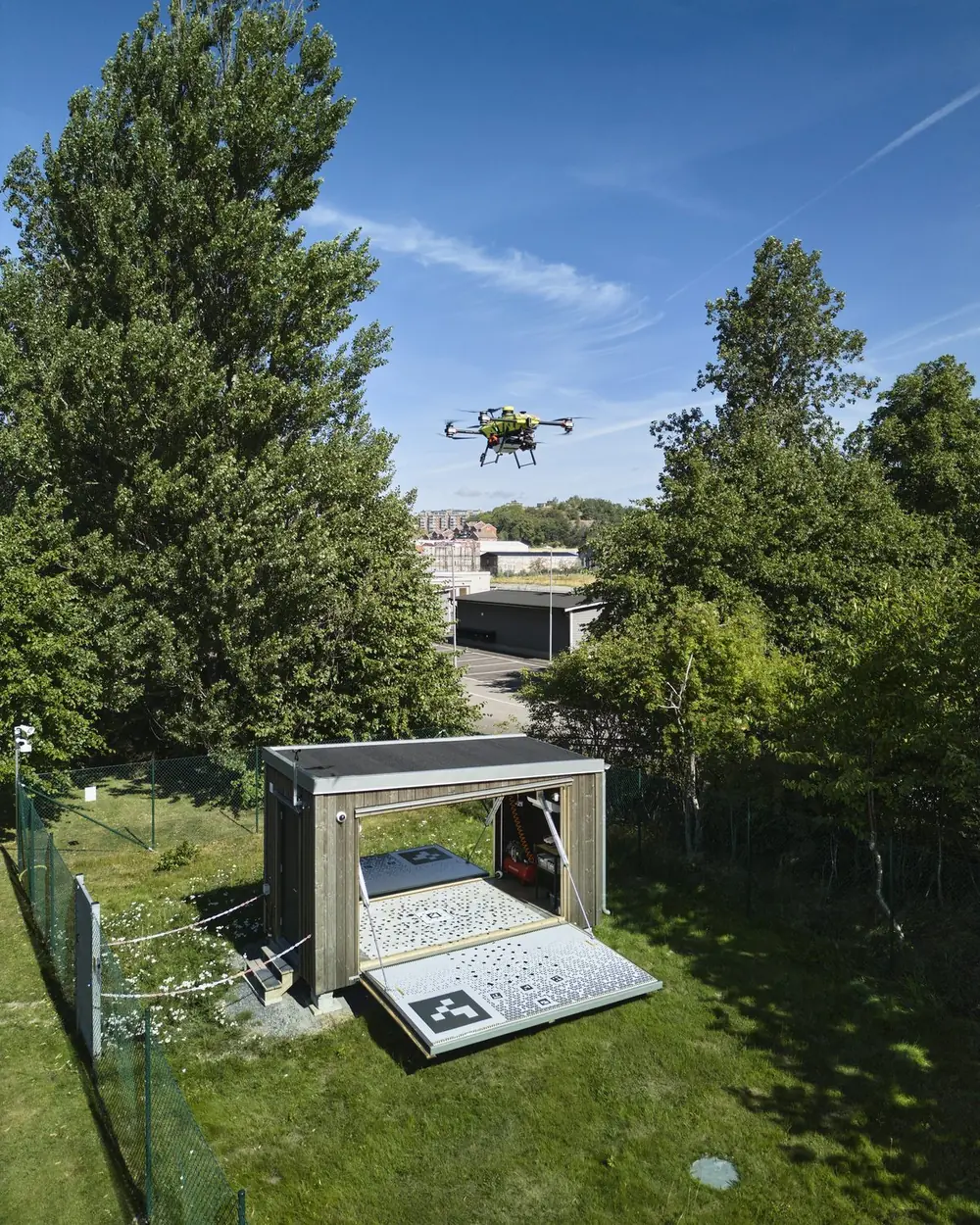
E3 at the DEMS base, Forsåker, Mölndal. August 2026
The Everdrone DEMS system
Everdrone provides the system that makes DEMS operational
Customers establish a DEMS capability. They do not buy a drone. At the core is E3, the aircraft Everdrone developed for emergency medical missions, in live operation in Västra Götaland since spring 2026. One DEMS resource delivers the defibrillator and gives emergency services a real-time view of the scene, from DEMS bases positioned where they make the greatest difference.
See how the system works →01
E3, developed by Everdrone
Built in house for emergency medical missions in Nordic conditions: cold, snow, rain and wind. Faster, with longer range and twice the payload of the previous generation.
02
An upgraded defibrillator, chosen by healthcare
In Västra Götaland, the DEMS resource carries the LIFEPAK CR2 defibrillator. The healthcare provider defines the medical payload.
03
Deliver and inform, in one mission
The same DEMS resource that lowers the AED streams live video (LiveView) to the dispatch centre. In a live trial since June 2026, it also sends real-time images to ambulance crews on their way.
04
Positioned with DEMS GridPlanner™
DEMS bases are placed based on an analysis of past emergency calls, population density and airspace, so each DEMS resource reaches as many patients as possible.
05
Approved where people live
Authorised under EASA rules to fly beyond visual line of sight over populated areas, so DEMS resources can reach patients in towns and cities.
06
Supervised by aviation professionals
Flight supervisors who come from aviation, hold the drone pilot certificates the authorities require and complete DEMS Academy training for complex DEMS missions.
How a DEMS mission works
From the 112 call to the scene
The ambulance is dispatched as usual. Which incidents activate a DEMS resource is decided by the healthcare provider.
The full mission, step by step →- 1
112 call
The dispatcher identifies a suspected cardiac arrest.
- 2
Dispatch
A DEMS resource is dispatched alongside the ambulance, from the existing dispatch workflow.
- 3
On scene
The AED is lowered close to the patient, the dispatcher guides its use, and LiveView shows the scene.

Where DEMS operates
In live operation in Sweden and France
DEMS resources are dispatched automatically alongside the ambulance. In Västra Götaland, the region and Everdrone have operated DEMS since 2020.
active DEMS bases in Sweden and France
Source: Everdrone, October 2026
people within reach of a DEMS resource
Source: Everdrone, October 2026
average DEMS arrival in Borås, against 7–8 min for the ambulance
Source: Västra Götaland Region, July 2026
the first study of drone-delivered AEDs to real suspected cardiac arrests
Source: European Heart Journal, 2022
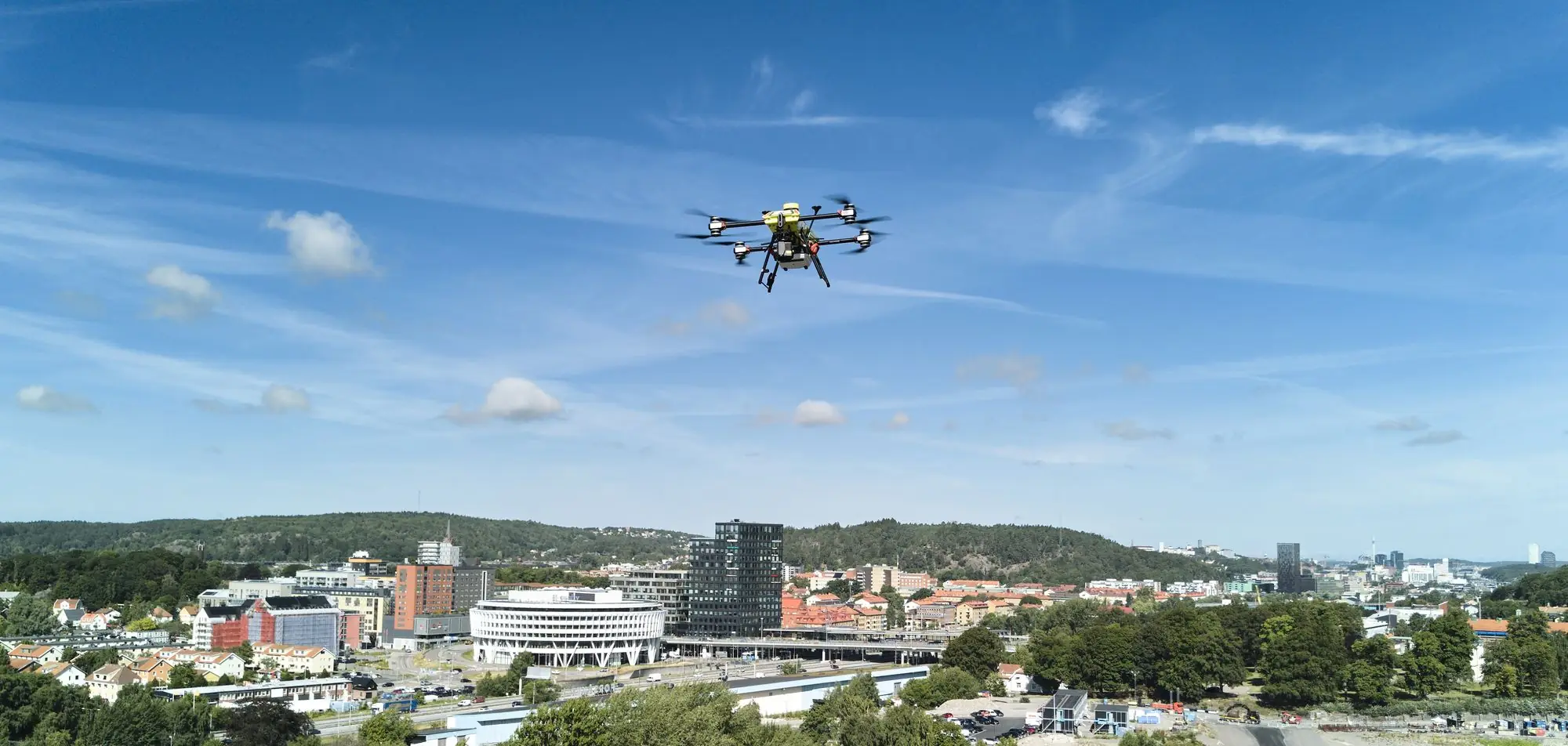
Real missions
When the defibrillator arrived first
In July 2026, a man in his 60s had a cardiac arrest in Borås. The DEMS resource delivered an AED before the ambulance arrived, bystanders used it with the dispatcher’s guidance, and he regained a pulse at the scene before being treated in hospital.
2021, a world first
In December 2021, a 71-year-old man had a cardiac arrest while shovelling snow. The drone lowered an AED 10 metres from him 3 min 19 s after dispatch, before the ambulance arrived. It was used to defibrillate him, contributing to his survival. Source: New England Journal of Medicine, 2022.
Borås, 19 July 2026
- 1
112 call. A DEMS resource is dispatched alongside the ambulance from the Borås base.
- 2
The AED is lowered at the scene before the ambulance arrives.
- 3
Bystanders give CPR and attach the AED, guided by the dispatcher.
- 4
A shock is delivered. The man regains a pulse at the scene.
First step
Start with your own data
A feasibility study with GridPlanner analyses your historical emergency calls, response times and geography to show where DEMS resources should be positioned and what they can achieve.

Latest news
Research, guides and news
Drone-delivered AED used in life-saving cardiac arrest response in Sweden
Borås, 19 July 2026. Pulse regained at the scene before the ambulance arrived.
Dispatcher referral of bystanders to retrieve drone-delivered AEDs
AED attachment rose from 27% to 50% after dispatcher training.
Drones providing live video to dispatch centers during time-critical incidents
First or only resource on scene in 98% of completed missions.
Where would DEMS make the greatest difference in your region?
A feasibility study uses your own emergency call data to show where DEMS resources should be positioned and what they can achieve.