

Implementing DEMS
Establish DEMS without building an aviation organisation
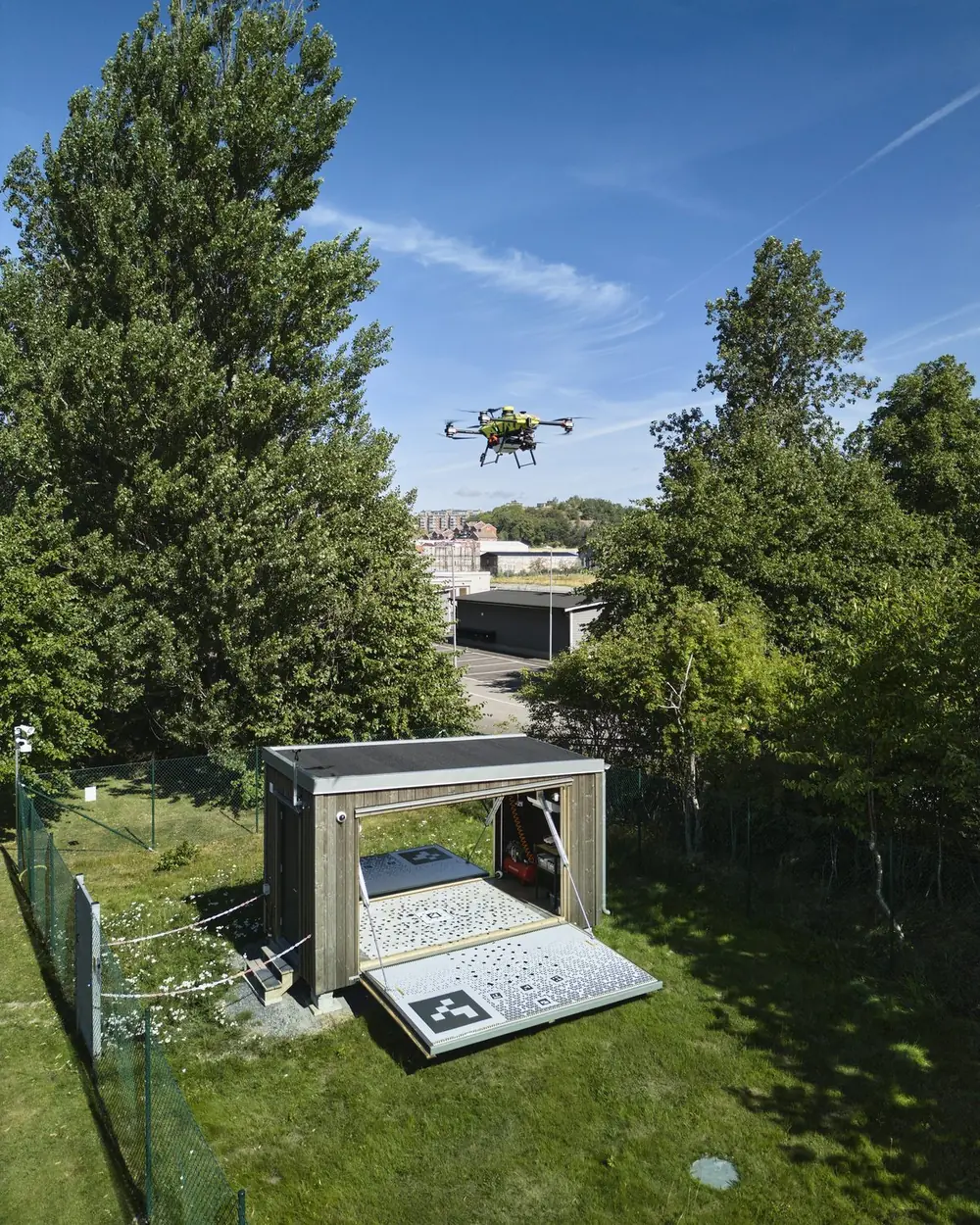
Everdrone provides the aircraft, bases, software, approvals, flight operations and training. Your organisation keeps clinical governance and decides when a DEMS resource is dispatched.
Roles and responsibilities
Healthcare governs the medicine. Everdrone runs the system.
Each side does what it is built for. Your organisation keeps clinical governance. Everdrone takes responsibility for everything needed to put a DEMS resource in the air.
Healthcare provider
Clinical governance
Defines DEMS applications, medical payloads and dispatch criteria
Ambulance response as usual
The ambulance is on its way
Owns patient care and clinical follow-up
Dispatch centre
Existing workflow
Dispatch teams trained through DEMS Academy
Identifies the emergency. A DEMS resource is dispatched alongside the ambulance from the existing dispatch system
Receives LiveView of the scene
Guides the bystander to retrieve and attach the AED
Everdrone
System provider
DEMS bases, aviation approvals, airspace coordination, dispatch and LiveView integration
The alert reaches the Everdrone DEMS system and the aircraft launches automatically
A flight supervisor supervises every mission. The AED is lowered by winch close to the patient
Maintenance, monitoring, support and performance reporting
Everdrone does not set clinical protocol.
Delivered as a service
Built into the workflow you have
Everdrone runs the aircraft, DEMS bases, flight supervision, maintenance and support. Your organisation needs no drone pilots.
A DEMS resource is dispatched automatically alongside the ambulance, with no extra step at the dispatch desk. The dispatcher’s task is to guide the bystander once the AED has landed, and DEMS Academy trains dispatch teams for exactly that.

Built for public procurement
Everything a public tender asks for, agreed before go-live.
Defined service levels
What the service delivers, and when, agreed before operation starts.
An implementation plan
From DEMS base installation to acceptance tests, with clear responsibilities.
A security and privacy package
The documentation that procurement and information security teams ask for.
Performance reporting
Against agreed measures such as DEMS availability and the time from alert to an AED ready to use on scene.
Start with a feasibility study
Know where DEMS creates value before you deploy it
A feasibility study uses DEMS GridPlanner™ to analyse your historical emergency calls, ambulance response times, population and geography, and simulates DEMS missions to real incident locations. It also maps airspace, integration and evidence needs.
You receive
- Recommended DEMS base positions and expected coverage
- Expected time advantage over ground response, by area
- Expected mission volume by emergency type
- Integration, airspace and privacy assessment
- A decision basis for leadership, funding and procurement

From feasibility to operation
Four phases, one system
- 1
Phase 1
Feasibility study
Network design, local workflow, airspace, integration and evidence plan.
- 2
Phase 2
Implementation
DEMS bases installed, dispatch and LiveView integration tested, approvals in place, staff trained through DEMS Academy, acceptance tests passed.
- 3
Phase 3
Operation
DEMS resources in daily dispatch, with performance reported against agreed measures such as DEMS availability and the time from alert to an AED ready to use on scene.
- 4
Phase 4
Development
New areas, new bases and new DEMS applications added on the same system.
Every new DEMS base in an existing network reuses the integration, governance and training already in place.
Questions by role
What people ask before they start
Do we need to build a drone organisation?+
No. Everdrone provides the aircraft, DEMS bases, software, approvals, flight supervision, maintenance and training. Your organisation keeps clinical governance and decides when a DEMS resource is dispatched.
Does DEMS replace ambulances or volunteer responders?+
No. A DEMS resource is dispatched alongside them. It complements ground EMS and HEMS.
How do we start?+
With a feasibility study on your own emergency call data, which shows where DEMS bases should be positioned and what they can achieve.
Who decides when DEMS is dispatched, and with what?+
The healthcare provider. You define the dispatch criteria, the DEMS applications and the medical payloads.
Does the AED actually get used?+
That depends on the dispatch workflow. After dispatcher training, 50% of drone-delivered AEDs were attached in cases with bystander CPR, up from 27%. (Resuscitation Plus, 2026)
How much earlier does it arrive?+
In Lancet Digital Health (2023), the AED arrived a median 3 min 14 s before the ambulance in 67% of cases. In BMC Emergency Medicine (2026), the DEMS resource was first or only on scene in 98% of missions.
Does DEMS add work during the call?+
The DEMS resource is triggered from your existing dispatch system. Your task is to guide the bystander to the AED once it is delivered.
What do we see?+
LiveView of the scene. In a study in western Sweden (BMC Emergency Medicine, 2026), live video reached the dispatch centres in every completed mission.
How are we trained?+
Through DEMS Academy.
Why is a drone flying over my street?+
A DEMS resource is on its way to someone nearby who has called 112 and needs urgent help.
A defibrillator has been delivered. What do I do?+
Bring it to the patient and follow the voice instructions. The 112 operator will guide you. The defibrillator only gives a shock if one is needed.
Is it safe?+
Every mission is supervised by a trained flight supervisor, and no adverse events were reported in the published studies of live operations.
Start with your own data
A feasibility study uses your own emergency call data to show where DEMS resources should be positioned and what they can achieve.