New study on drone-delivered defibrillators: “How usage can be significantly increased”
Press release 25.05.2026
“With the right procedures and training for emergency dispatch personnel, usage can be optimized. We’re actively collaborating with the Center for Resuscitation Science at Karolinska Institutet and the Västra Götaland Region to establish and validate best practices for integration into the emergency care chain. Based on insights from both research and real-world operations, we continuously develop the systems to improve outcomes with every delivery.”
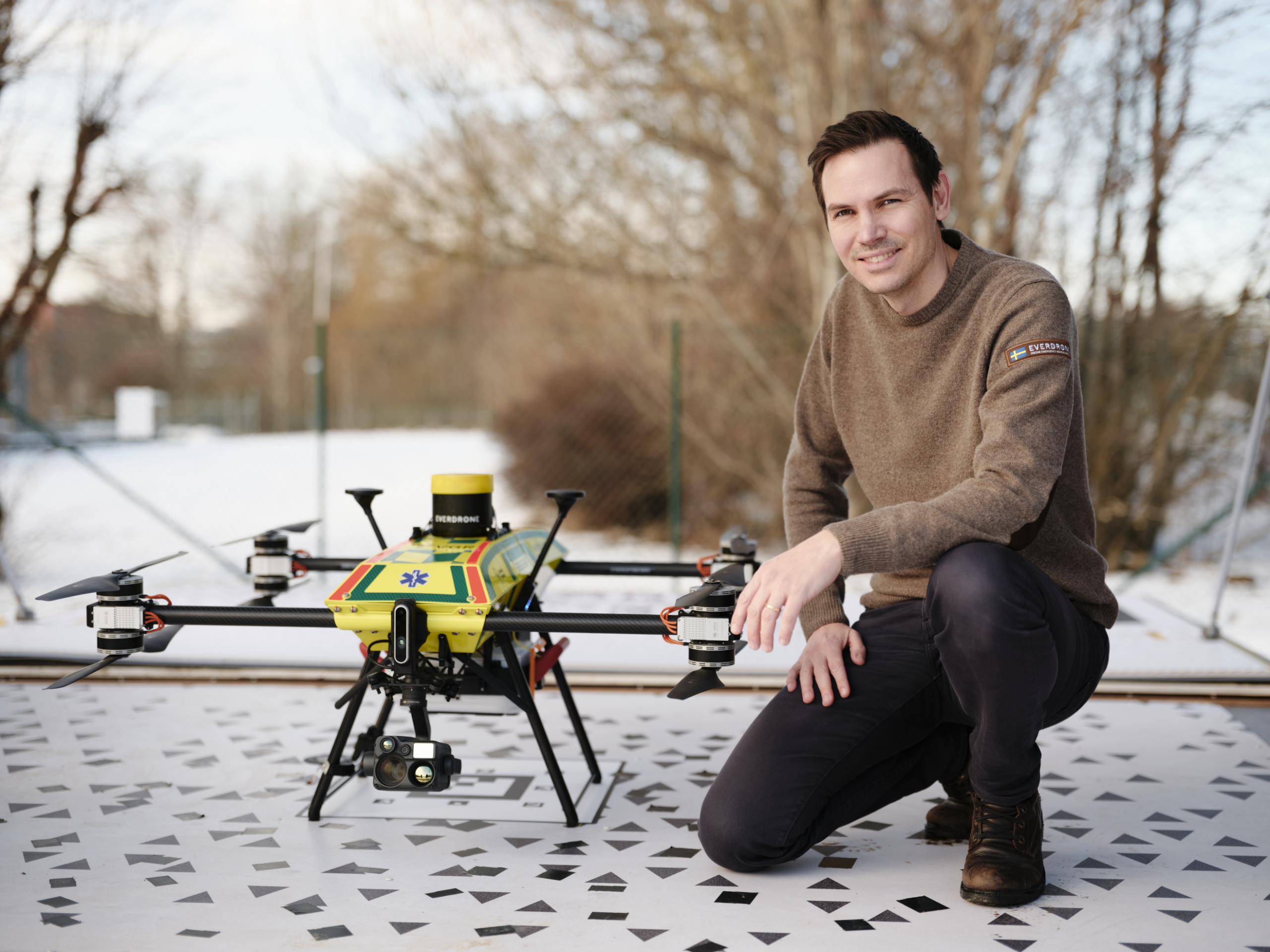
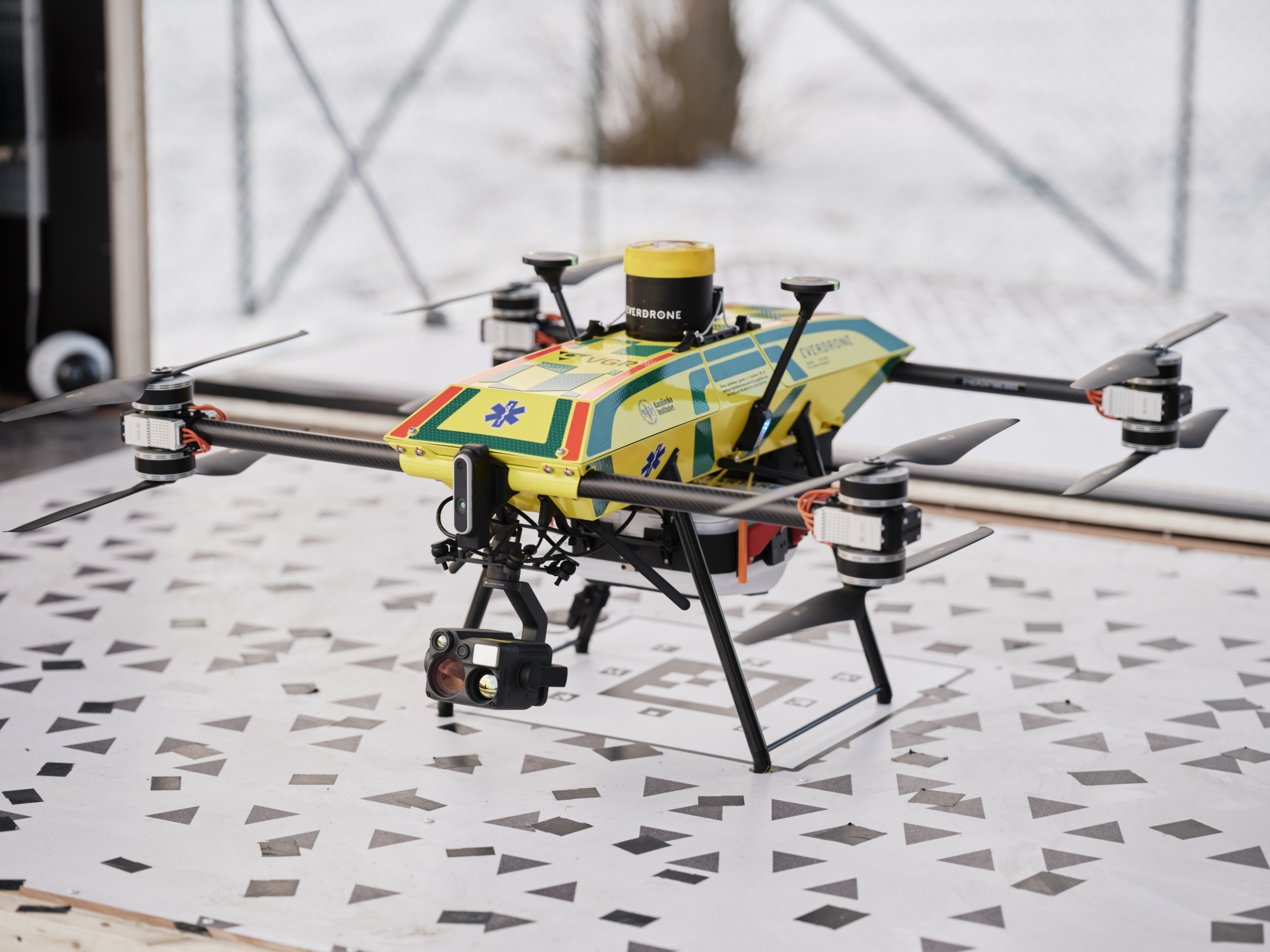
Everdrone’s drones deliver defibrillators to emergency incidents several minutes before an ambulance with medical personnel arrives. However, not everyone knows how to use a defibrillator. New research now shows that the right support from emergency dispatch centers can significantly increase the number of people who are able to use the equipment in time.
“When dispatch operators are given the right training and procedures, the likelihood that the defibrillator is actually used also increases”, says Mats Sällström, CEO of Everdrone.
The study was conducted by researchers at Karolinska Institutet and analyzed real-life emergency cases where Everdrone’s drones delivered defibrillators before the ambulance arrived.
The results show that, following the introduction of a training and support package at the dispatch center, the proportion of cases where operators instructed bystanders to retrieve the drone-delivered defibrillator increased from 32 to 58 percent. At the same time, the proportion of cases where the defibrillator was applied to the patient increased from 27 to 50 percent.
“With the right procedures and training for emergency dispatch personnel, usage can be optimized. We’re actively collaborating with the Center for Resuscitation Science at Karolinska Institutet and the Västra Götaland Region to establish and validate best practices for integration into the emergency care chain. Based on insights from both research and real-world operations, we continuously develop the systems to improve outcomes with every delivery.”
The researchers also identified several factors that influence whether the drone-delivered defibrillator is actually used. One important factor was the number of people present at the scene. The more bystanders present, the higher the likelihood that one person could retrieve the defibrillator while another continued performing CPR.
“Other barriers identified in the study may arise during the emergency call, such as a stressed caller or language barriers. In such situations, the instructions and support provided by the dispatcher can be decisive in determining whether the defibrillator is used.”
Overall, the study shows that Everdrone’s drones can deliver defibrillators rapidly to the scene of a suspected cardiac arrest, but that clear procedures and support within the dispatch center are essential to ensure that the time saved translates into actual use.
In addition to the drone system itself, Everdrone also develops services that strengthen the early chain of care in other ways, such as enhanced situational awareness through live video and image support.