

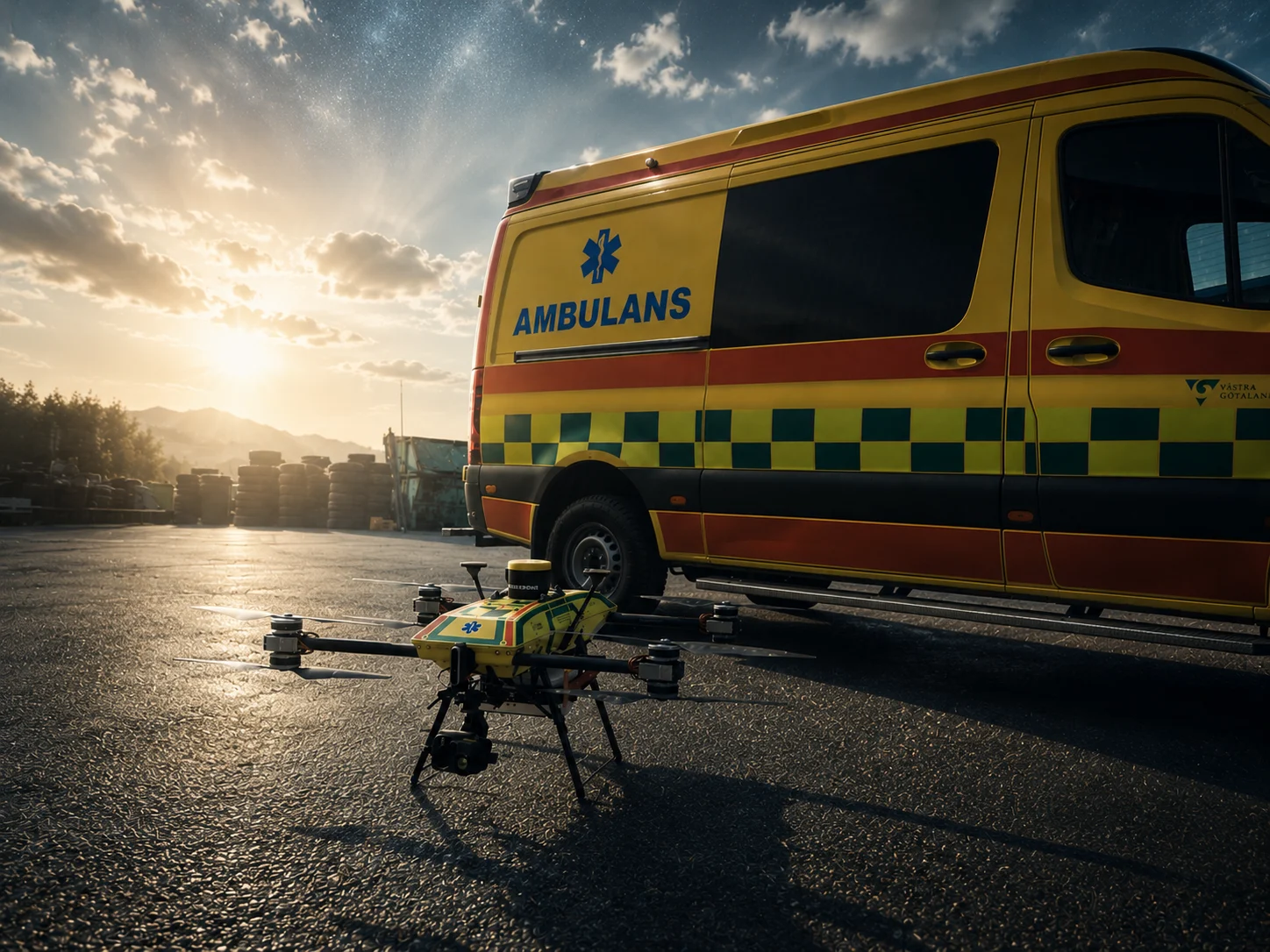
Drone EMS
Drone Emergency Medical Services
DEMS is to drones what HEMS is to helicopters: an integrated emergency medical capability, not just an aircraft.
Why the first minutes matter
Defibrillation works. Getting a defibrillator there in time is the gap.
Most cardiac arrests happen at home, where a defibrillator is rarely close by. DEMS brings it there, while the ambulance is on its way.
of people who have an out-of-hospital cardiac arrest do not survive
Source: Lancet Digital Health, 2023
survival could be reached with early CPR and defibrillation
Source: Lancet Digital Health, 2023
of cardiac arrests happen in private homes
Source: Lancet Digital Health, 2023
What DEMS does
Deliver · Inform · Enable
01
Deliver
Critical medical equipment brought to the patient or scene. The healthcare provider defines the medical payload.
AED delivered before the ambulance in 67% of cases, median 3 min 14 s earlier.
Source: Lancet Digital Health, 2023
02
Inform
Real-time aerial situational awareness for dispatch and responding crews.
Live video to dispatch in every completed mission.
Source: BMC Emergency Medicine, 2026
03
Enable
Earlier intervention by people on scene, guided by the dispatcher.
AED attachment rose from 27% to 50% after dispatcher training.
Source: Resuscitation Plus, 2026
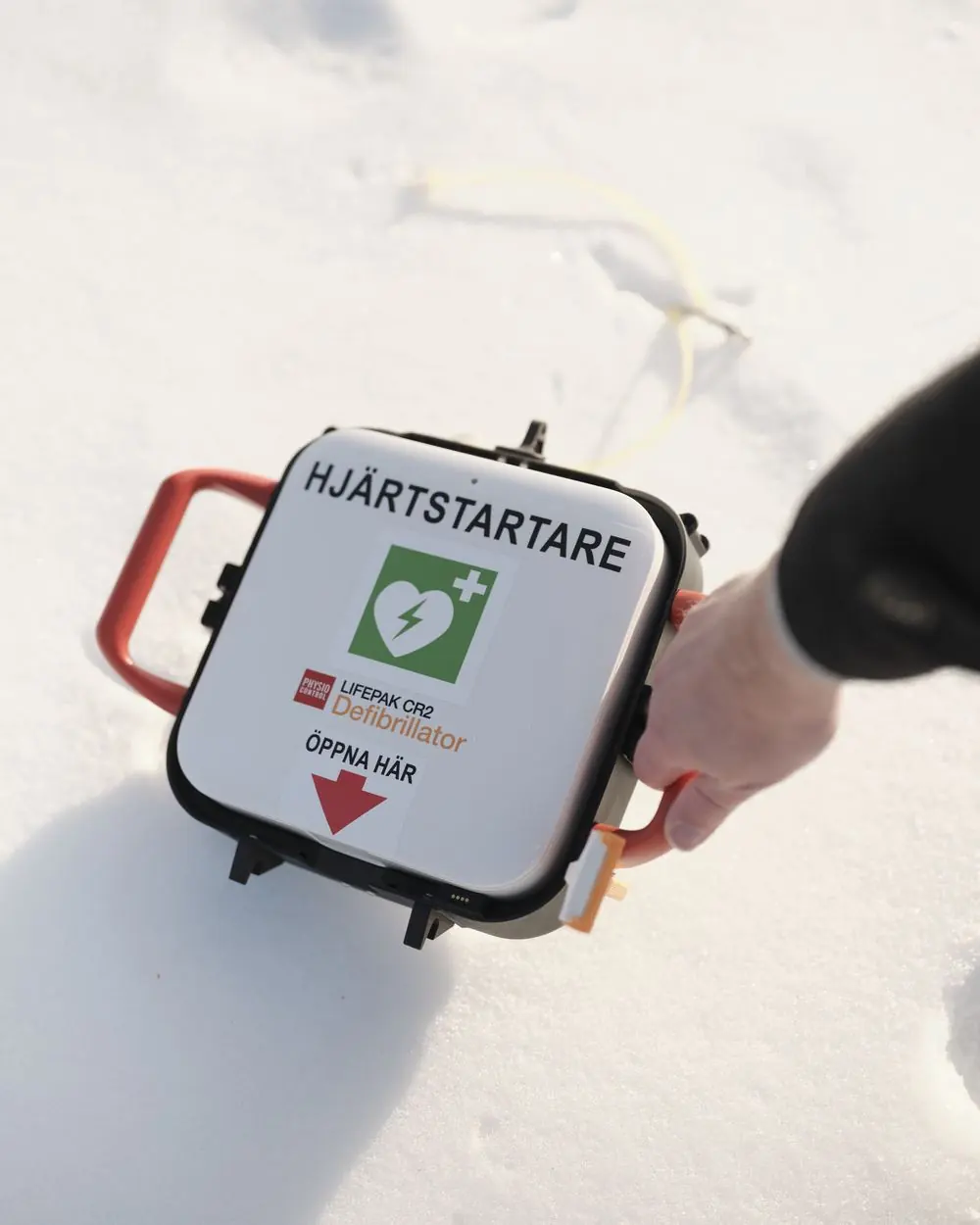
Enable, in practice
The people already there act first
When the AED lands, a bystander brings it to the patient and attaches it while the dispatcher guides every step. The AED itself gives voice instructions and only delivers a shock if one is needed.
How a DEMS mission works
From 112 call to AED, in five steps
The ambulance is dispatched as usual. A DEMS resource is dispatched alongside it, never instead of it.
- 1
The emergency is identified
The dispatcher identifies a suspected cardiac arrest and dispatches the ambulance as usual.
- 2
A DEMS resource is dispatched
The alert reaches the Everdrone DEMS system from the existing dispatch workflow.
- 3
The flight
The aircraft launches automatically from a strategically positioned DEMS base and flies directly to the scene, monitored throughout by a flight supervisor.
- 4
The delivery
The AED is lowered by winch, within 15 m of the patient or building in 91% of deliveries (Lancet Digital Health, 2023).
- 5
The intervention
The dispatcher guides a bystander to retrieve and attach the AED. LiveView shows the scene to dispatch while the ambulance is on its way.
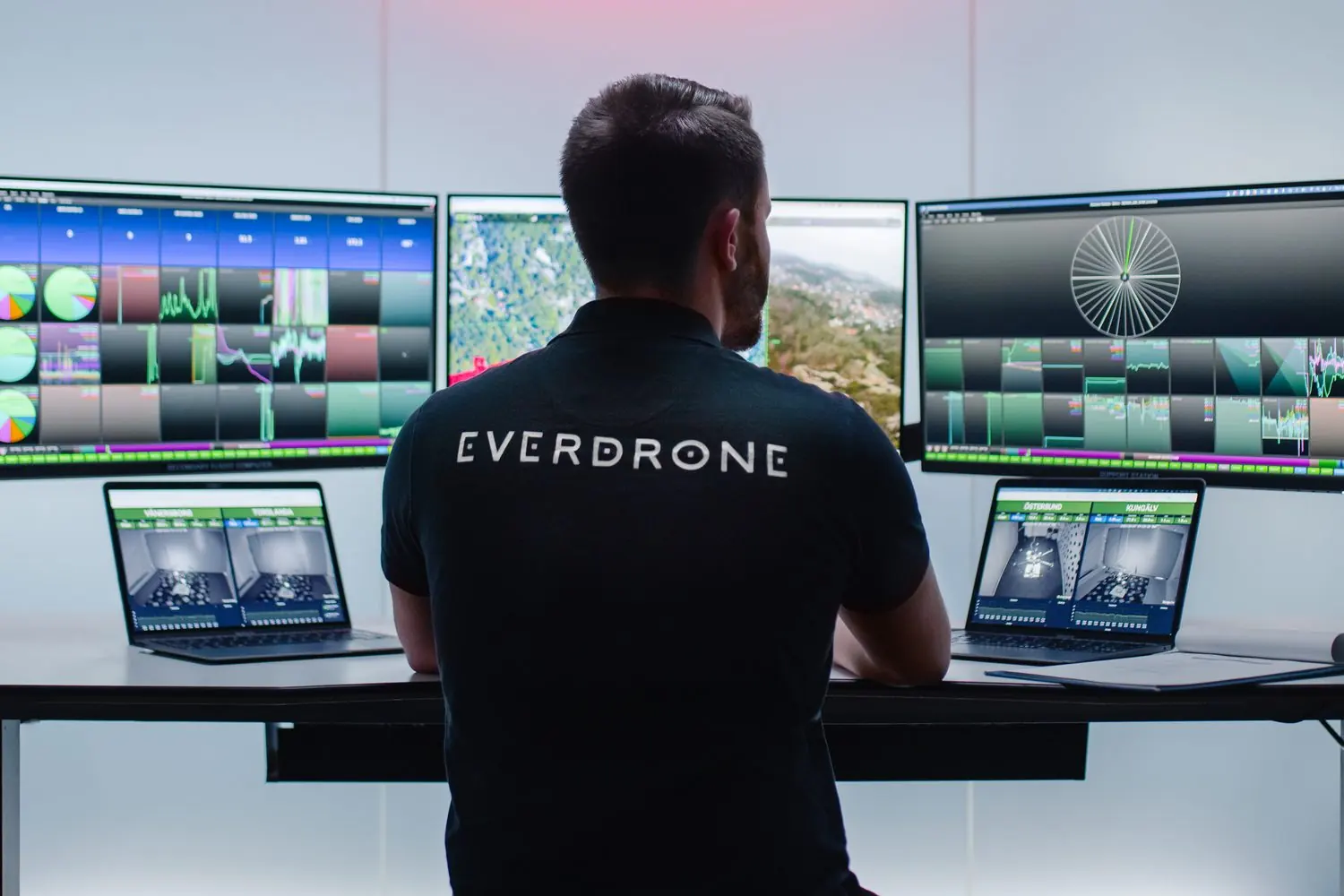
Delivered as a service
Built into the workflow you have
Everdrone runs the aircraft, bases and flight supervision, so your organisation needs no drone pilots.
How implementation works →Medical payloads
Defined by healthcare
The healthcare provider decides which DEMS applications and medical payloads are used, according to clinical protocols. AED delivery for cardiac arrest is the most established application.
E3 carries twice the payload of the previous generation, so the same system can support other applications the provider defines.
AED for cardiac arrest
In live operationAdrenaline for anaphylaxis
Possible, not yet in useNaloxone for opioid overdose
Possible, not yet in useBleeding-control equipment
Possible, not yet in useConfigured to your organisation
The medical payload is configured to what your EMS organisation wants to achieve: the AED model you choose, or other equipment for the emergencies you prioritise. You also choose the indicators that matter most, such as time to defibrillation, population coverage or mission volume by emergency type.
Before deployment, DEMS GridPlanner™ simulates DEMS missions against your historical emergency calls, so you see the expected effect before a single base is installed.
Explore a feasibility study →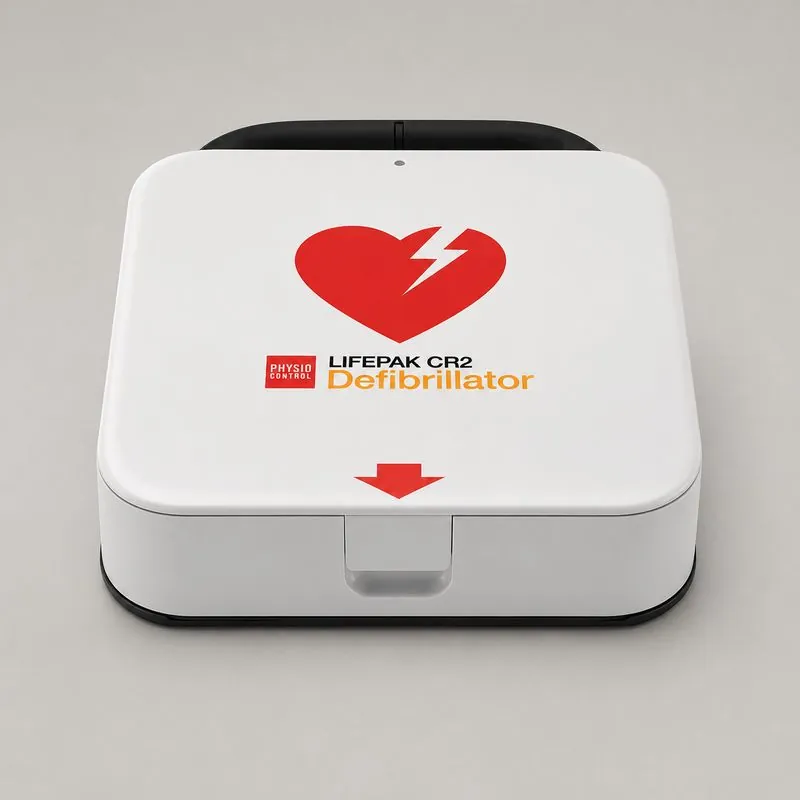
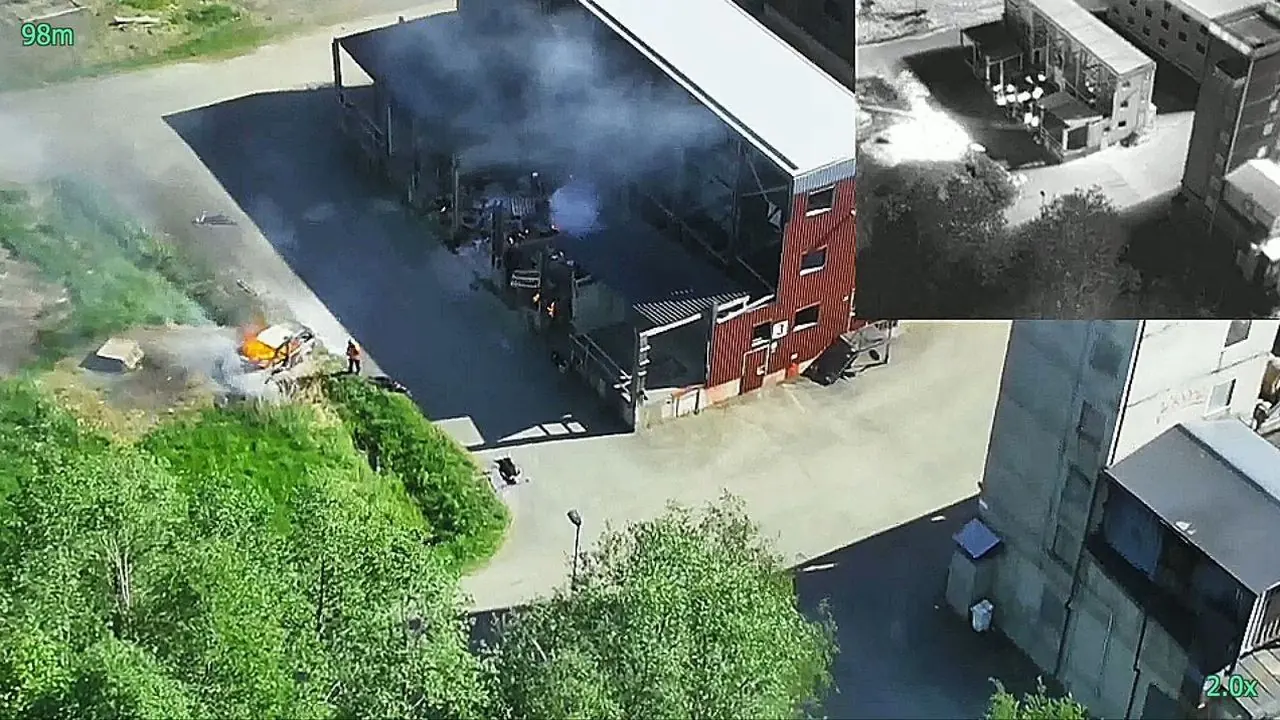
Real-time aerial situational awareness
Eyes on the scene before anyone arrives
In a study in western Sweden (BMC Emergency Medicine, 2026), the DEMS resource was first or the only resource on scene in 98% of completed missions, with a median arrival time of 4 min 24 s against 8 min 50 s for ground units. Live video reached the dispatch centres in every completed mission.
Fire and rescue dispatchers rated it highest: two thirds reported high value.
Since June 2026, live missions also trial sending real-time images to ambulance crews on their way, so they know what awaits them.
The Everdrone DEMS system
One company, responsible for the whole system
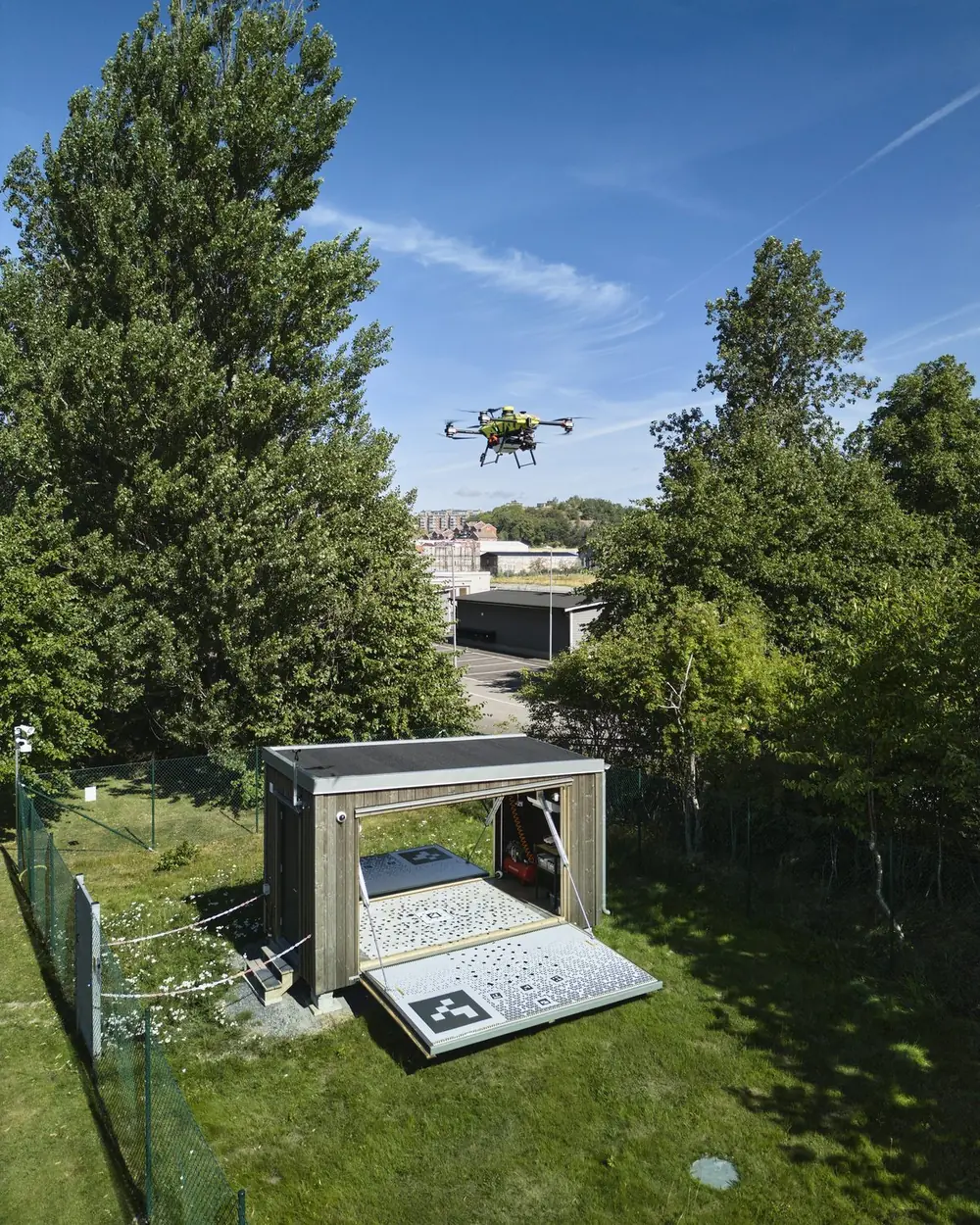
Everdrone provides the integrated technology, aviation and operational capability required to establish and operate DEMS.
01
Developed in Sweden, end to end
Everdrone develops the aircraft, the automated DEMS base, the onboard systems and the software itself. One team owns performance, safety and integration, so changes are fast and controlled.
02
Approved for populated areas
Everdrone holds EASA-compliant authorisation for beyond-visual-line-of-sight DEMS operations with no population-density limitations. DEMS resources can reach patients in towns and cities.
03
Proven in real emergencies
Drone-delivered AEDs from Everdrone’s system have been used to defibrillate patients before the ambulance arrived, most recently in Borås in July 2026.
Source: New England Journal of Medicine, 2022 · Lancet Digital Health, 2023
04
Flexible integration
DEMS is triggered from the dispatch centre’s existing system, including via Rakel, the Swedish public-safety radio network, where used. LiveView can stream to the dispatch centre and to partner video platforms.
05
Aviation professionals
Every mission is supervised by flight supervisors who come from aviation, hold the drone pilot certificates the authorities require and complete DEMS Academy training for complex DEMS missions.
06
Planned for impact
GridPlanner positions DEMS bases where they create the greatest medical and response-time impact.
DEMS in the chain of survival
Dispatched alongside, never instead
DEMS complements ground EMS, HEMS, volunteer responders and public AEDs.
1 · Call
112 call
A caller reports a suspected cardiac arrest
2 · Dispatch
Dispatch centre
Medical criteria decide which resources go
3 · In parallel
Ambulance
Drives to the scene as usual
DEMS resource
Delivers the AED and LiveView
Volunteer responders
Volunteers alerted by text (SMS-livräddare in Sweden) and public AEDs
4 · On scene
On scene
A bystander attaches the AED, guided by the dispatcher, until the ambulance takes over
Three different models
DEMS, DFR and medical logistics
The aircraft technology may overlap. The mission, workflow and system integration define the category.
| Compared on | Medical logistics | Drone as first responder (DFR) | DEMS |
|---|---|---|---|
| Purpose | Move goods between known locations | Bring information from the incident | Bring emergency medical capability to the incident |
| Trigger | Order or schedule | Incident | Medical emergency |
| Medical payload | Possible | Usually none | Core capability |
| Clinical governance | Depends on the cargo | Not central | Fundamental |
See what DEMS could do in your region
A feasibility study uses your own emergency call data to show where DEMS resources should be positioned and what they can achieve.