

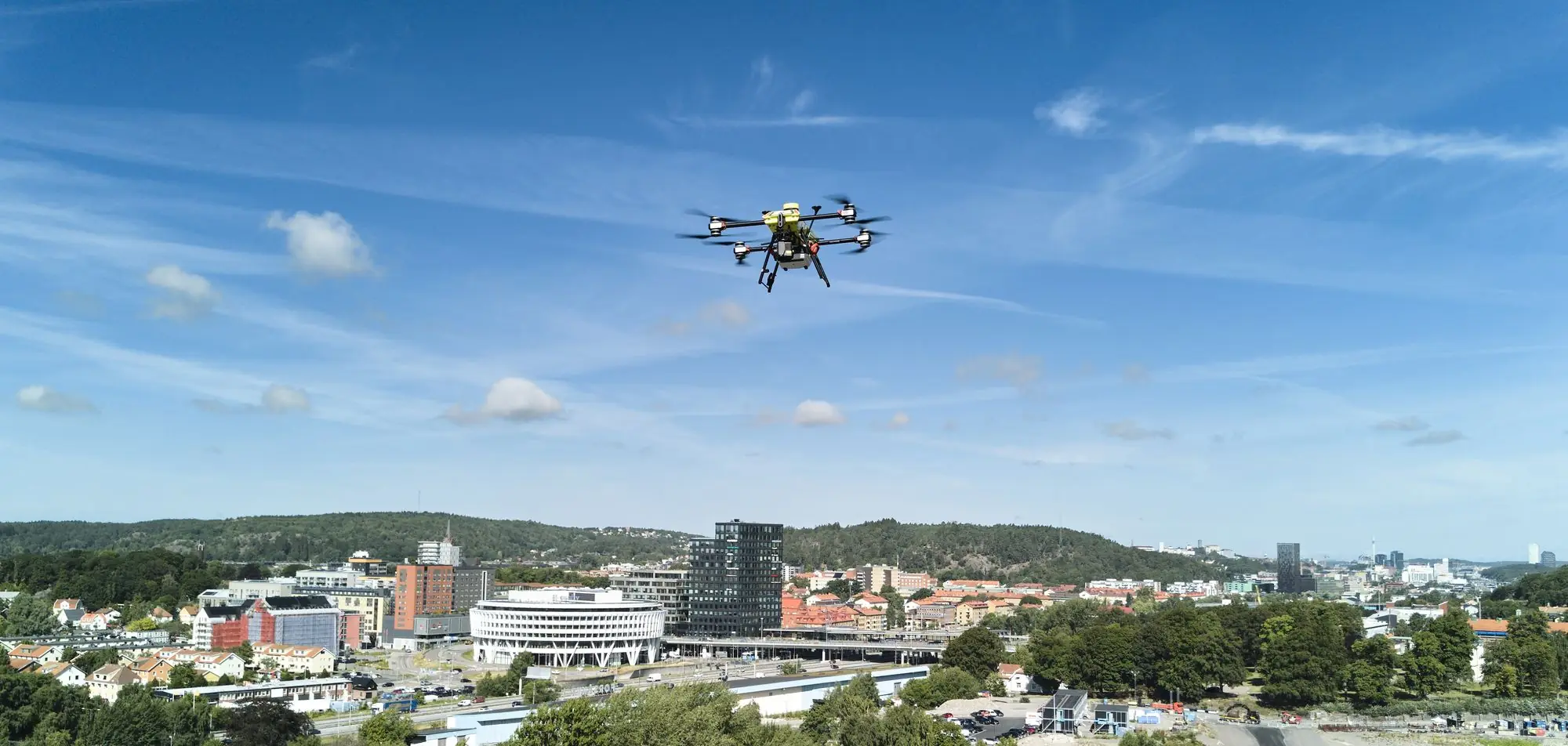
Evidence
Evidence from real emergencies
Since 2020, DEMS has been studied in live emergency operations together with Karolinska Institutet’s Center for Resuscitation Science. Six peer-reviewed studies describe what happens when a DEMS resource is dispatched.
peer-reviewed studies from live DEMS operations in Sweden
Published 2022–2026
first DEMS missions to real suspected cardiac arrests
Source: European Heart Journal, 2022
adverse events reported in the 2023, 2024 and 2026 studies of live operations
Source: Lancet Digital Health, 2023 · Resuscitation, 2024 · BMC Emergency Medicine, 2026
Featured study, 2026
Trained dispatch nearly doubled AED attachment
Speed alone is not enough. What turns a delivered AED into an attached AED is the dispatcher who sends the bystander to get it.
Researchers reviewed all 123 drone-delivered AEDs that arrived before the ambulance in suspected cardiac arrest in Sweden, 2020 to 2023. In June 2022 the dispatch centre introduced a support bundle:
- A 20-minute e-learning for dispatchers and nurses
- A training AED at the dispatch centre for hands-on practice
- Desk instructions on what to tell the caller after delivery
- A coordinator reminding the dispatcher during the call
- An app showing the aircraft en route and a photo of where the AED landed
Among cases with bystander CPR
Dispatcher referred the bystander to the AED
32%7 of 22
58%23 of 40
AED attached to the patient
27%6 of 22
50%20 of 40
When the dispatcher referred the bystander, the AED was used in a majority of cases. The DEMS resource and the dispatch workflow work as one system.
Source: Schierbeck et al., Resuscitation Plus, 2026
Read the study →Published studies
One finding per study
Each study comes from live operations, not test flights. Read the finding, then open the paper.
2026 · Resuscitation Plus
AED attachment
50%
of drone-delivered AEDs attached after dispatcher training, up from 27%. Referral rose from 32% to 58%.
Dispatcher referral of bystanders to retrieve drone-delivered AEDs in suspected OHCA. Schierbeck et al.
Read the study →2026 · BMC Emergency Medicine
Situational awareness
98%
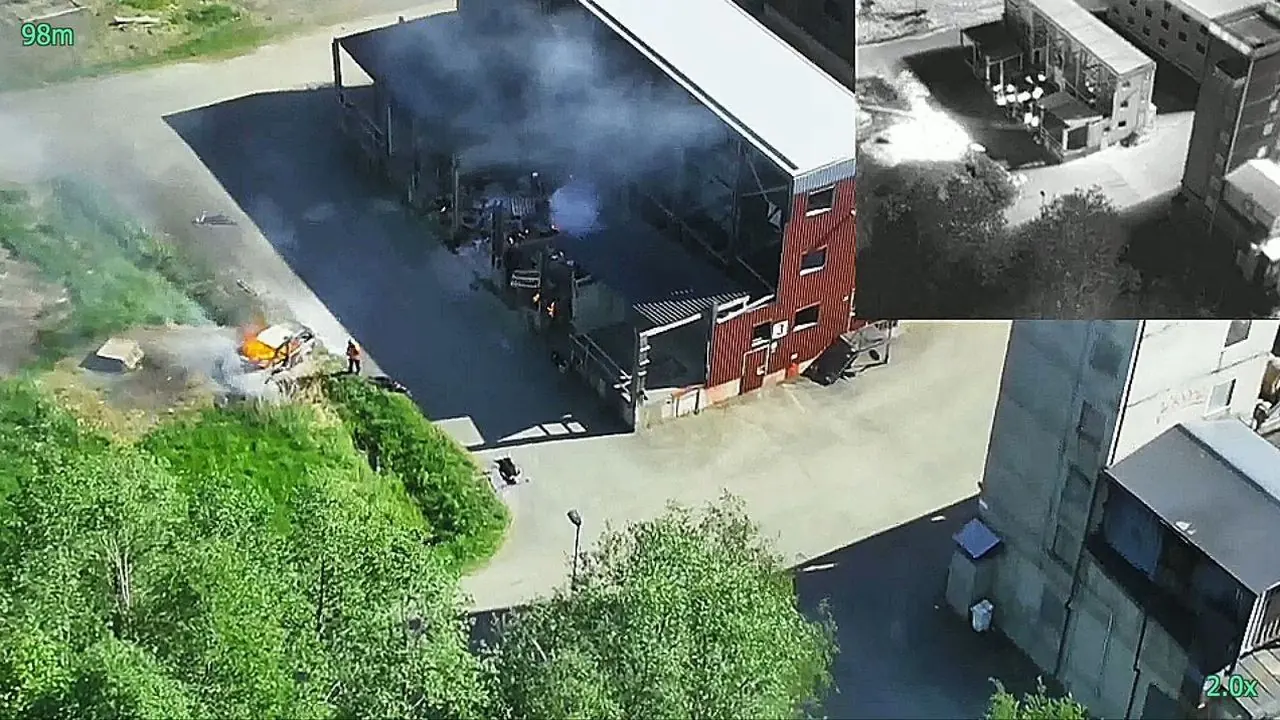
first or only resource on scene in completed missions, median 4 min 24 s against 8 min 50 s for ground units. Live video to dispatch in every completed mission.
Drones providing live video to dispatch centers during time-critical incidents. Kristiansson et al.
Read the study →2024 · Resuscitation
Situational awareness
90%
of missions arrived first on scene, before EMS. Photos reached the dispatch centre in all 59 missions.
Drones can provide dispatch centres with on-site photos before arrival of EMS in time-critical incidents. Kristiansson et al.
Read the study →2023 · Lancet Digital Health
AED delivery
3 min 14 s
median time ahead of the ambulance, in the 67% of cases where the AED arrived first. Delivered within 15 m of the patient or building in 91%. No adverse events.
Drone delivery of AEDs compared with ambulance arrival in real-life suspected OHCA. Schierbeck et al.
Read the study →2022 · New England Journal of Medicine
Case report
3 min 19 s
from dispatch to an AED on the ground, 10 m from the patient and before the ambulance. It was used to defibrillate, contributing to survival.
Use of a drone-delivered AED in an out-of-hospital cardiac arrest. Schierbeck et al.
Read the study →2022 · European Heart Journal
AED delivery
92%
of flights delivered the AED in the first live study, in 2020. Before the ambulance in 64%.
Automated external defibrillators delivered by drones to patients with suspected OHCA. Schierbeck et al.
Read the study →From feasibility to patient outcomes
What remains to be studied
The published studies show that DEMS is feasible, safe and often first on scene, ahead of ground response, and that trained dispatch turns delivered AEDs into attached AEDs. What remains is the effect for the patient and for the healthcare system.
Established in published studies
Feasible in live operations
European Heart Journal, 2022
Often first on scene, ahead of ground response
Lancet Digital Health, 2023 · BMC Emergency Medicine, 2026
Safe, with no adverse events reported
Lancet Digital Health, 2023 · Resuscitation, 2024 · BMC Emergency Medicine, 2026
Live view of the scene for dispatch
Resuscitation, 2024 · BMC Emergency Medicine, 2026
Attachment rises with trained dispatch
Resuscitation Plus, 2026
Still to be studied
Mission Availability
How often a DEMS resource is ready when it is needed
Alarm to usable payload
Time from the 112 alarm until the AED is on the ground
Time to first shock, and attachment across regions
What happens on scene once the AED has landed
Patient outcomes
What earlier intervention means for the patient
Health economics
Cost per outcome for the region and ambulance service
Why the evidence is not transferable
The evidence belongs to the system, not the aircraft
These results come from the Everdrone DEMS system in live operation: dispatch integration, flight supervision, trained dispatchers and the medical payload working as one. Each part affects whether an AED reaches the patient and gets used.
Everdrone coined the term DEMS and has built the category in live operations. It started with three firsts: the first study of drone-delivered AEDs in real emergencies (European Heart Journal, 2022), the first drone-delivered AED used to defibrillate a patient before the ambulance arrived (New England Journal of Medicine, 2022) and the first study to show delivery before the ambulance in most missions (Lancet Digital Health, 2023). Specifications describe what an aircraft can do. Evidence shows what a system achieves.
Research collaboration
Study DEMS in live operations
We work with researchers who want to study DEMS in live operations: dispatch, clinical care, outcomes and health economics.
See what DEMS could do in your region
A feasibility study uses your own emergency call data to show where DEMS resources should be positioned and what they can achieve.