

News
Swedish Centre Party leader visits Everdrone: “This is what policymakers can do”
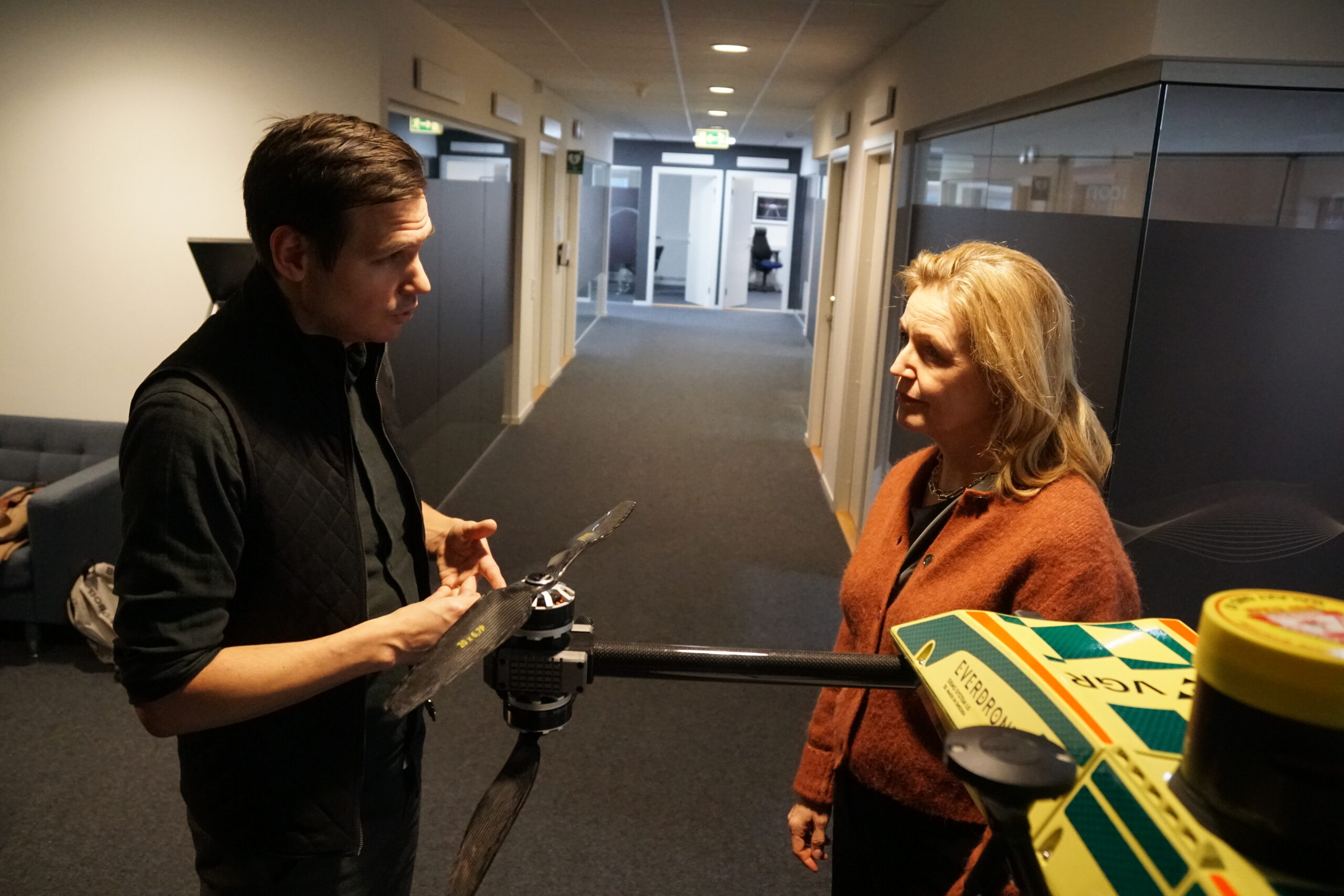
Centre Party leader Elisabeth Thand Ringqvist sees a drone deliver a defibrillator.
“Compared with Norway, Sweden is still far behind.”
Everdrone recently welcomed a visit from the Centre Party’s leader, Elisabeth Thand Ringqvist, who was given a demonstration of how Everdrone’s drones for emergency medical response operate. In the subsequent discussion, the focus was on how political action can help create better conditions for drone services.
“Compared with Norway, Sweden is still far behind,” says Mats Sällström, CEO of Everdrone.
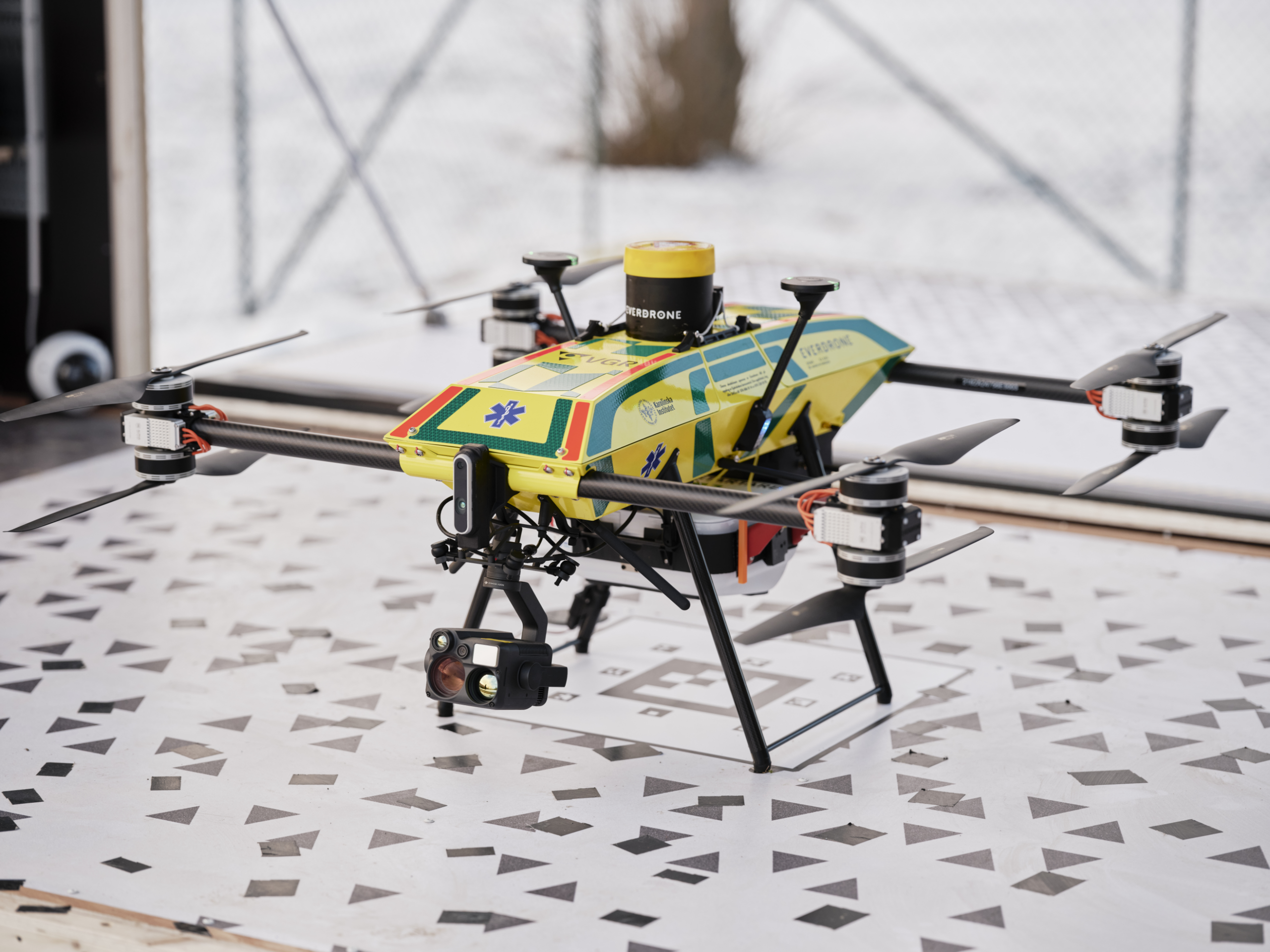
Everdrone develops and sells solutions for medical drone services. When an emergency call is placed, the operator can not only dispatch an ambulance, but also send a drone that autonomously travels to the person in need and winches down its payload from an altitude of 30 metres.
“A drone flies straight as the crow flies, so the time savings in delivering critical equipment ahead of an ambulance are significant, and that saves lives.”
Centre Party leader Elisabeth Thand Ringqvist is among those curious about what new technology could mean for Swedish healthcare. She therefore visited Everdrone to see firsthand how a drone can support emergency medical interventions. The demonstration was based on a simulated cardiac arrest scenario. A mock emergency dispatch centre sent out a drone which arrived on scene in just a couple of minutes. From the drone, a defibrillator was winched down, to be used by a bystander on site to save the “patient.”
“This is not science fiction. It is already in operation in parts of Sweden and France today. Our drones save lives.”
After the demonstration, Mats Sällström and Elisabeth Thand Ringqvist discussed what is required to ensure that more people in Sweden can gain access to this significantly faster form of emergency care. Mats pointed out that the biggest challenge lies in the handling of permits, and that this is where politics could make a real difference by allocating more resources to shorten processing times. In Norway, for example, it takes only a few months to obtain the necessary drone permits, while in Sweden it takes seven months for the relevant authorities to even begin processing a permit application.
“That the Centre Party leader is showing such active interest in how we can use new technology to make emergency healthcare more efficient is something we at Everdrone hope will inspire more politicians to see the same potential. Our long-term goal is to make this technology and its medical benefits available throughout Europe,” says Mats Sällström.
Participants in the visit on 15 December 2025 included Elisabeth Thand Ringqvist, Party Leader (Centre Party); Emmyly Bönfors, Municipal Commissioner, Gothenburg (Centre Party); Emma Dolderer, Chief of Staff (Centre Party); Jakob Olsson, Parliamentary Candidate (Centre Party); and Magnus Kristiansson, Nurse and Innovation Leader (VGR/Karolinska Institutet). Representing Everdrone were Mats Sällström, CEO; Magnus Hallberg von Geijer, Chief Commercial Officer; and David Borkmann, specialist in anaesthesia and intensive care, medical advisor.
More news
Latest from Everdrone
See what DEMS could do in your region
A feasibility study uses your own emergency call data to show where DEMS resources should be positioned and what they can achieve.